Seven ECNU Frontier Technologies Presented at the 2025 University Technology Transfer Fair
The 2025 University Technology Transfer Fair was held at the Canton Fair Complex in Pazhou, Guangzhou, from 15 to 17 December 2025. Under the theme “University–Enterprise Partnership and Integrated Innovation: Powering New Quality Productive Forces,” the fair brought together high-level innovative talent and research results from universities to foster new quality productive forces in the modern industrial system. Shi Guoyue, Standing Committee Member of the University Party Committee and Vice President of ECNU, attended the fair and visited the university’s booth, learning about each exhibit and affirming the university’s participation.
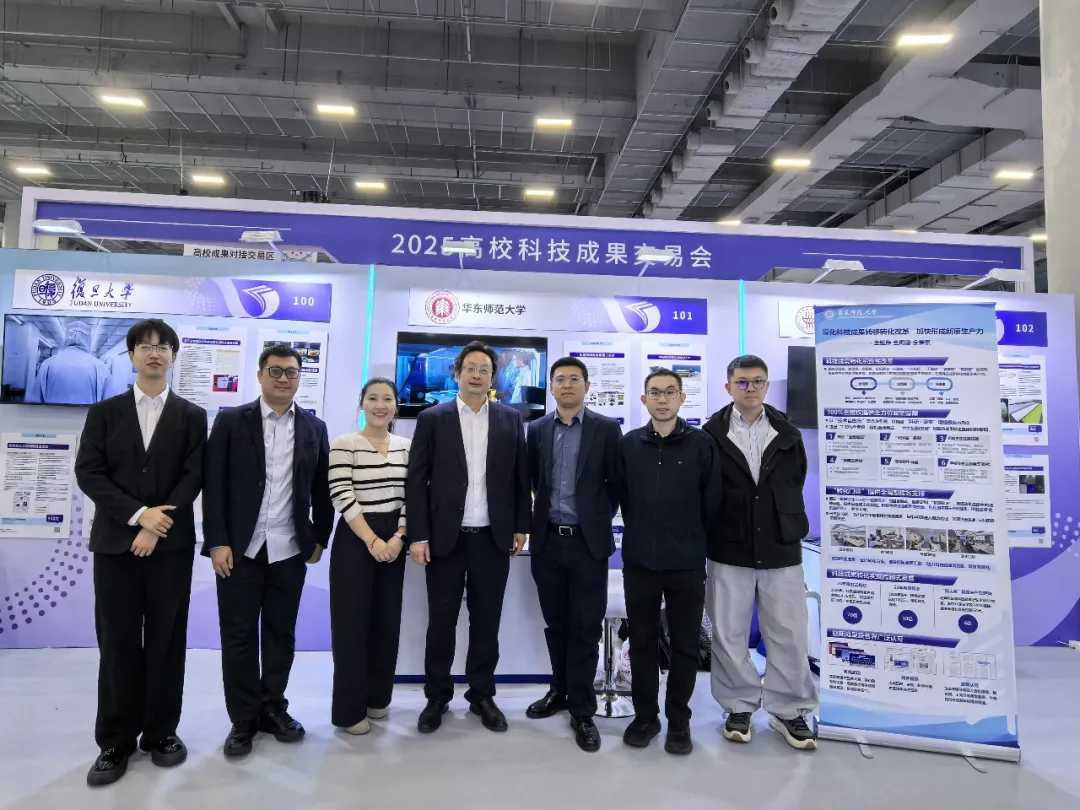
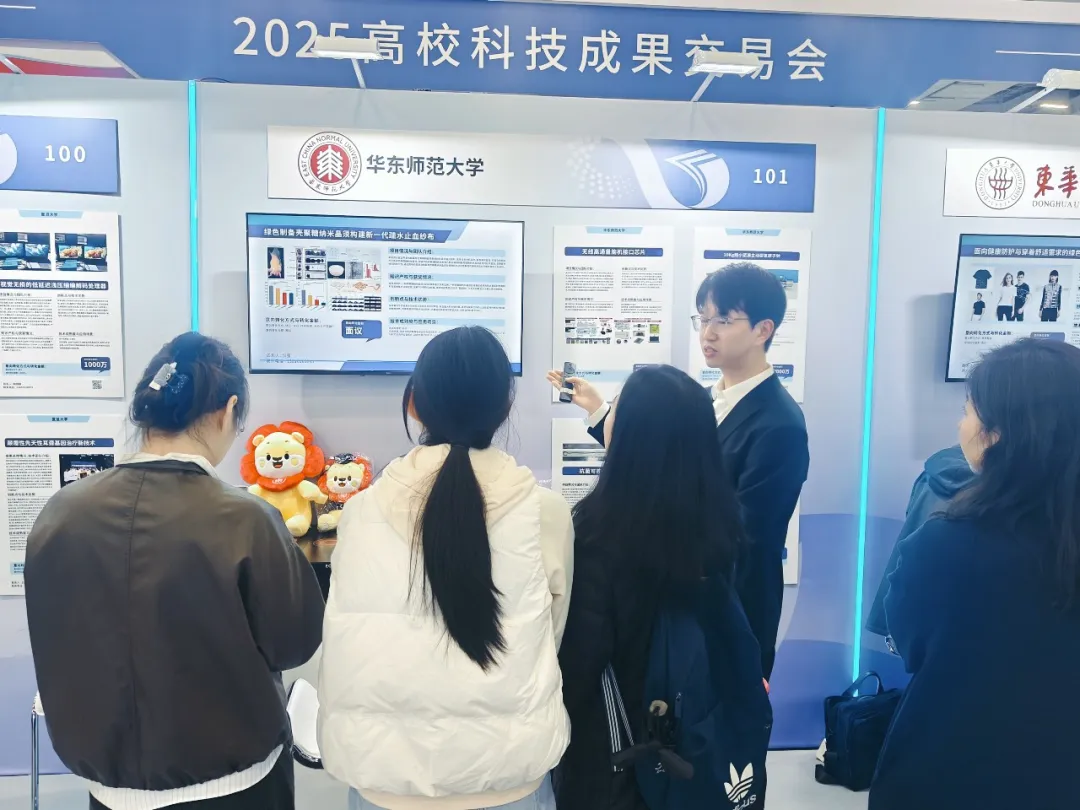
Seven ECNU innovations were exhibited in the university zone, spanning high-end medical devices, high-end equipment, artificial intelligence, life and health, and new materials, attracting wide attention from visitors. Two of them — the 10 kg ultra-compact active hydrogen maser and the wireless high-throughput brain-computer interface chip — were selected for physical display in the high-end equipment and AI+ sections of the results showcase, while the antibacterial controllably degradable hydrogel stent was selected for the pitch session.
Exhibited Technologies
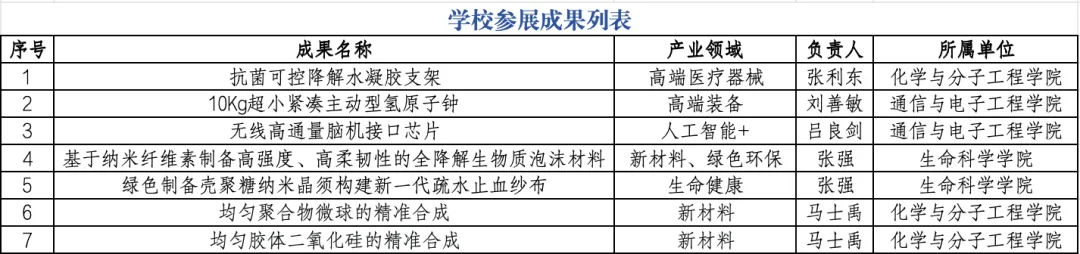
1. Antibacterial Controllably Degradable Hydrogel Stent
In recent years the development of degradable stents has brought new hope to patients, but uncontrolled degradation rates have also introduced new medical risks and application challenges. A key scientific question that urgently needs answering is how to ensure that the in-vivo degradation rate of degradable stent materials matches their mechanical support performance, preventing premature or localized degradation from causing structural failure and re-occlusion of tissue channels.
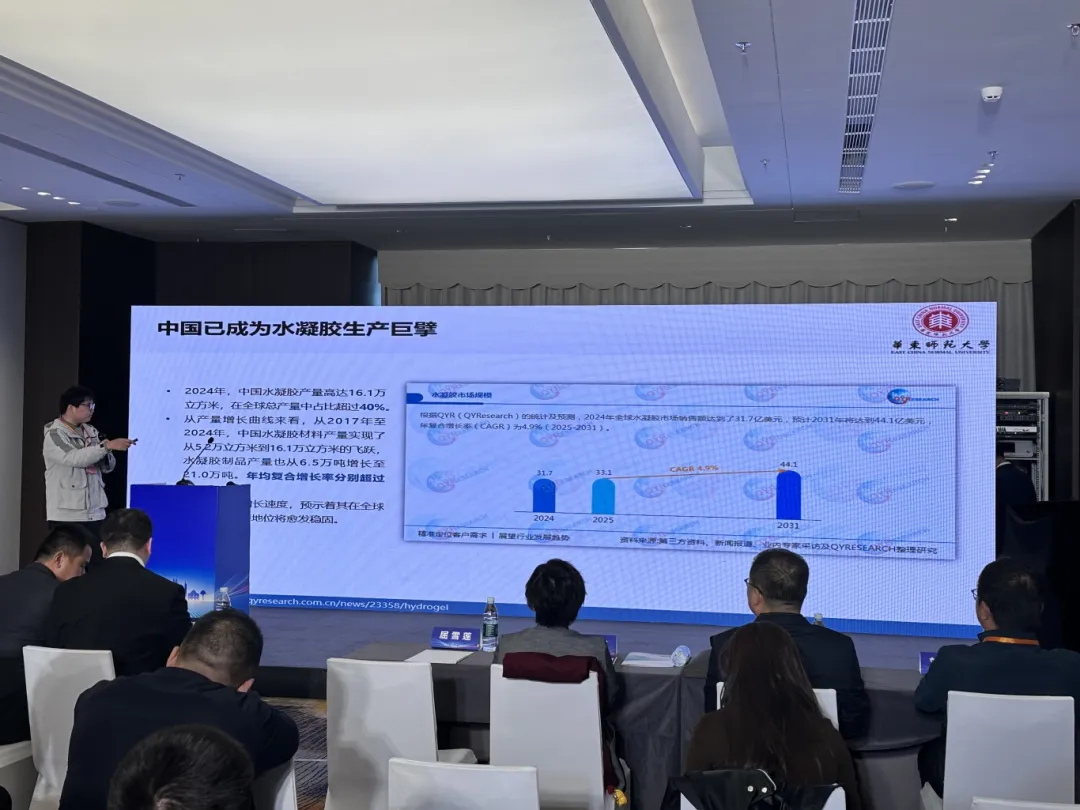
Guided by the need to address national healthcare requirements, the team of Professor Zhang Lidong at ECNU’s School of Chemistry and Molecular Engineering has built a hollow hydrogel stent with progressive degradation properties, so that degradation rate and mechanical performance can be matched in real time in tissue-engineering applications including cardiovascular, ureteral and gastrointestinal stents.
2. 10 kg Ultra-Compact Active Hydrogen Maser
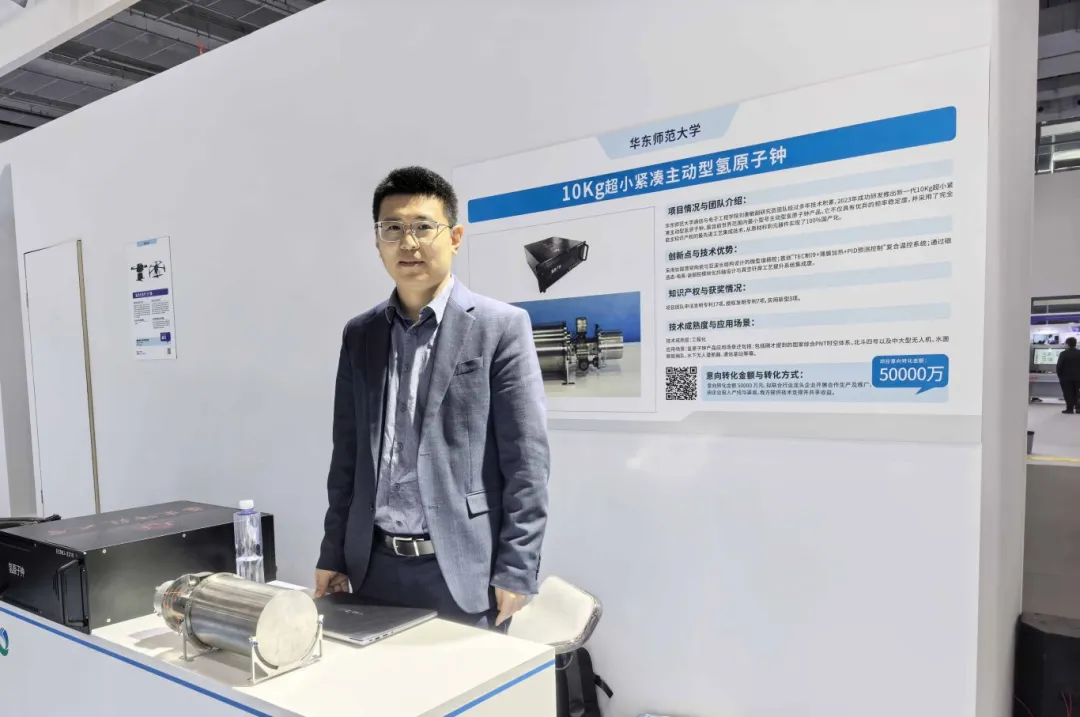
After years of technical accumulation, the team of Associate Researcher Liu Shanmin at ECNU’s School of Communication and Electronic Engineering successfully developed and launched a new generation of 10 kg ultra-compact active hydrogen maser in 2023. It is the smallest active hydrogen maser in the world, overcoming the traditional drawbacks of bulky size, long warm-up time and redundant weight.
It offers excellent frequency stability and uses the most advanced process integration technology under fully self-owned intellectual property, achieving 100% domestic content from raw materials through to components. It can be applied in the national comprehensive PNT space-time system, BeiDou-4, and in scenarios including medium and large unmanned aerial vehicles, surface vessel formations, unmanned underwater vehicles and communication base stations.
3. Wireless High-Throughput Brain-Computer Interface Chip
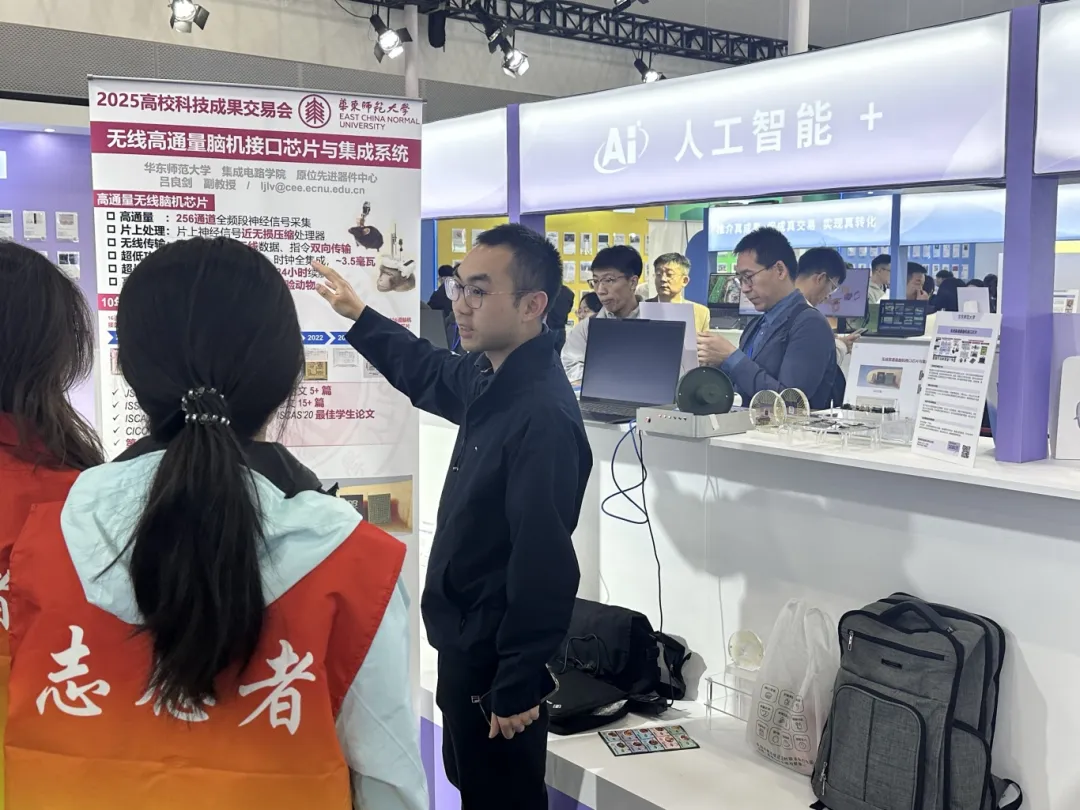
As a future core technology for frontier brain research and the diagnosis and treatment of brain disorders, brain-computer interfaces depend on untethered, long-duration and stable neural signal acquisition — a requirement driving the field rapidly toward wireless, integrated and intelligent systems. The 256-channel wireless implantable brain-computer interface chip independently developed by the team of Associate Professor Lü Liangjian at ECNU’s School of Communication and Electronic Engineering breaks through key technical bottlenecks, integrating neural signal acquisition, wireless transmission and intelligent processing on a single chip. The result is expected to replace imported equipment and to advance natural-state, fine-grained observational research in brain science; animal studies are already under way with several neuroscience institutions, covering areas such as spatial cognition and the mechanisms of brain disorders.
4. High-Strength, Highly Flexible, Fully Degradable Biomass Foam from Nanocellulose
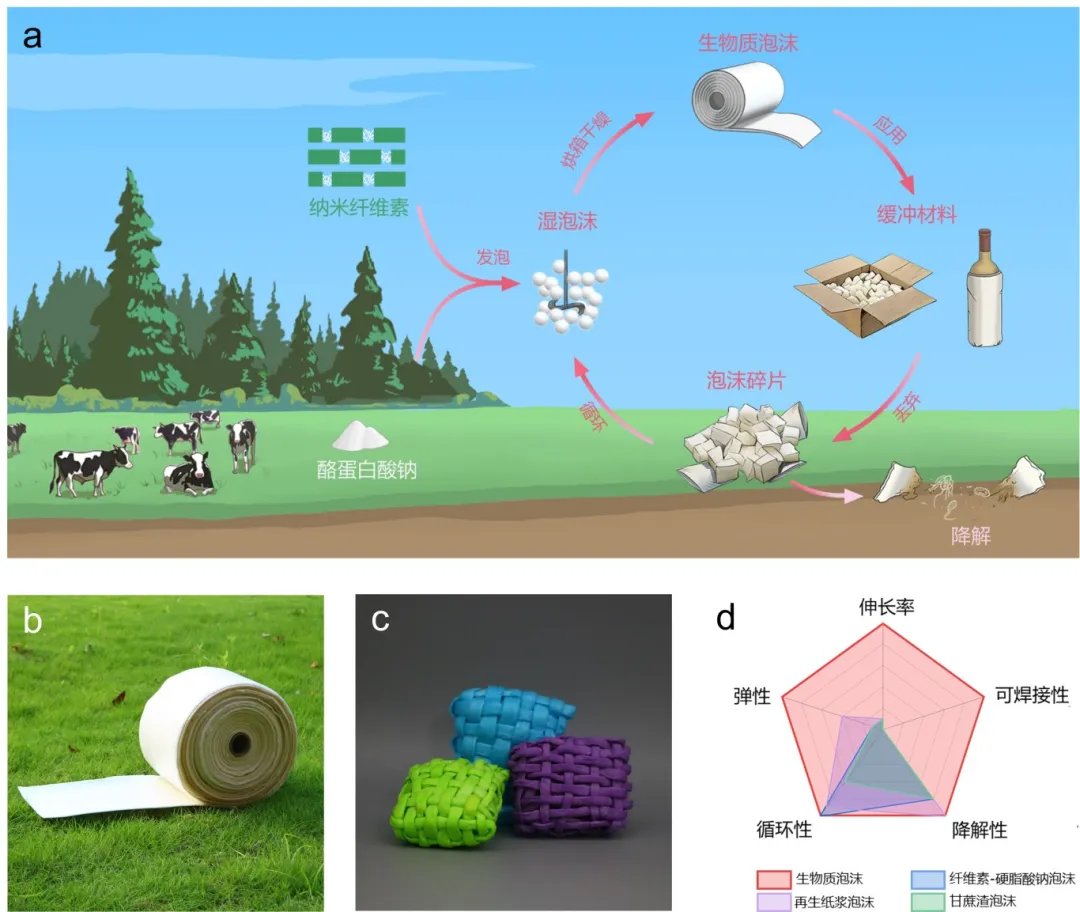
The team of Research Fellow Zhang Qiang at ECNU’s School of Life Sciences has developed a biomass foam with high elongation, water-weldability and full degradability. Using a co-foaming technique combining cellulose nanofibers (CNF) and sodium caseinate, it produces a stable wet foam and, during oven drying, forms a dense gas-barrier interface layer, overcoming the structural collapse that affects conventional biomass foams. The material shows excellent mechanical properties and fully degrades in just 21 days under soil microbial action; it can be recycled and reprocessed, greatly reducing manufacturing cost, and surface functionalization can give it hydrophobic and flame-retardant properties. Applications in packaging cushioning have been validated, with potential expansion into aerospace, automotive components and construction.
5. Green Synthesis of Chitosan Nanowhiskers for a New Generation of Hydrophobic Hemostatic Gauze
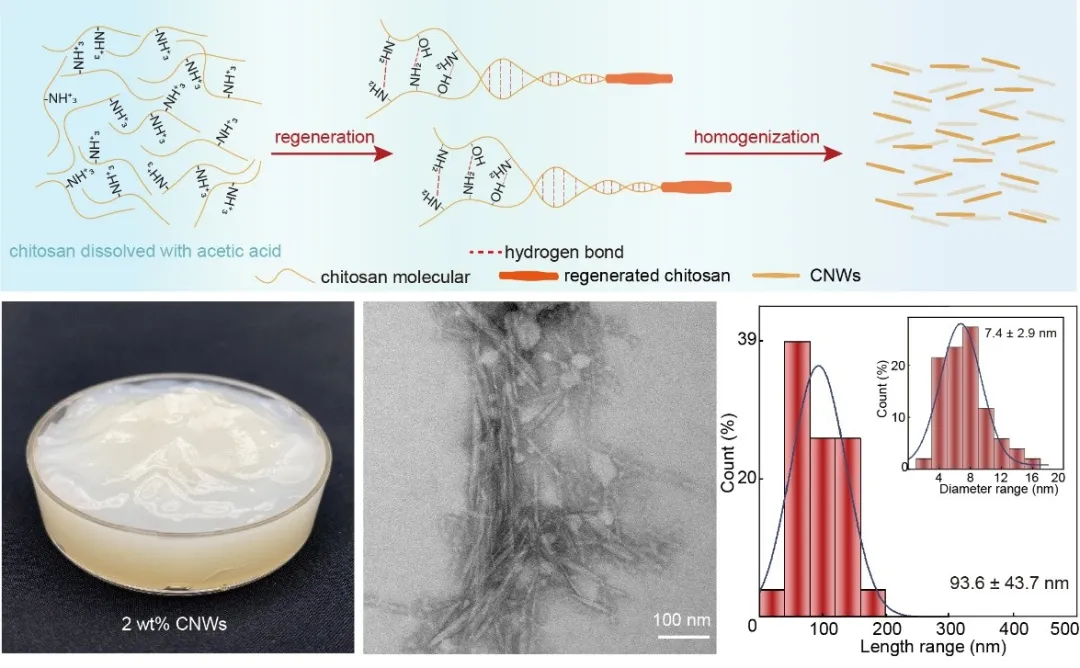
The team of Research Fellow Zhang Qiang at ECNU’s School of Life Sciences has used a self-developed acid–base regeneration technique to prepare chitosan nanowhisker material, and through a simple evaporative self-assembly process has loaded it uniformly onto medical gauze to create a highly effective hemostatic material with a tunable hydrophilic–hydrophobic balance. The material effectively addresses key problems of conventional hydrophilic hemostatic materials — low hemostatic efficiency and heavy blood loss in emergency care — while retaining the flexibility and portability of ordinary gauze. It maintains good handling while significantly reducing material usage and production cost, giving it strong potential for translation.
6. Precision Synthesis of Uniform Polymer Microspheres
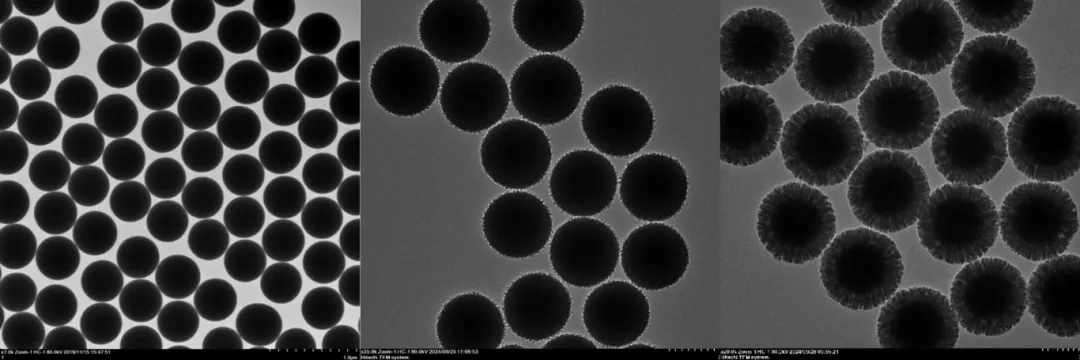
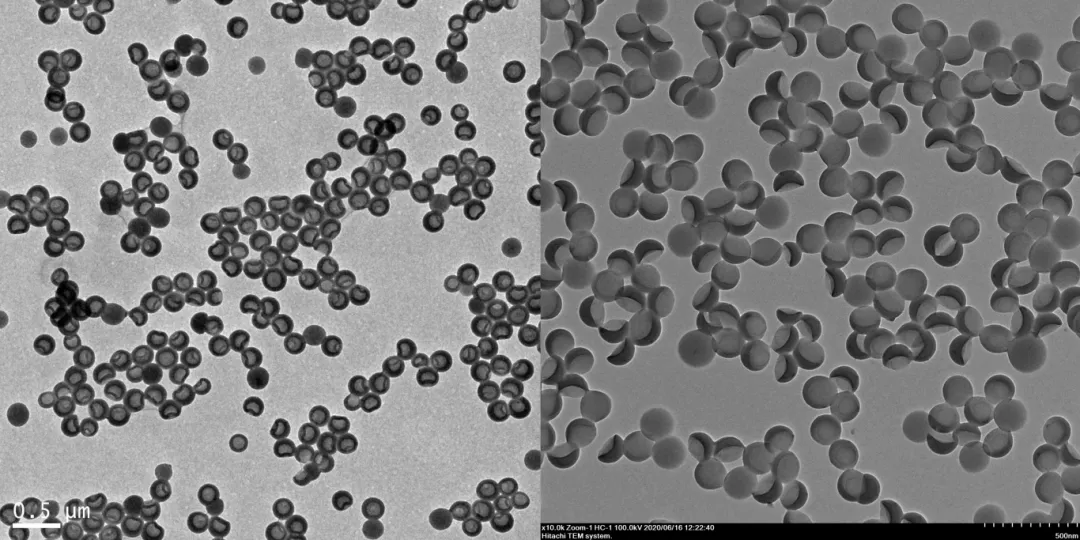
The team of Associate Professor Ma Shiyu at ECNU’s School of Chemistry and Molecular Engineering has achieved customizable synthesis of uniform polymer microspheres based on a novel soap-free emulsion polymerization mechanism, covering monodisperse, surface-rough and hollow dimpled products. The products are clean and highly pure; morphology, particle size (50–400 nm) and internal structure can all be customized; and uniformity is good (coefficient of variation< 5%),重复性优异;填补高端微球宏量化定制空白。可广泛应用于生物医药(免疫检测、药物载体)、高端显示(量子点、光扩散膜)、标准计量(粒度标准物质)、工业复合材料等领域。
7. Precision Synthesis of Uniform Colloidal Silica
The team of Associate Professor Ma Shiyu at ECNU’s School of Chemistry and Molecular Engineering has achieved customized synthesis of uniform colloidal silica under stabilizer-free conditions based on a novel liquid-phase particle formation mechanism, with products spanning monodisperse microspheres and porous materials. The products are highly clean with controllable morphology (smooth spheres / porous materials), a wide particle size range (150–900 nm) and excellent uniformity (coefficient of variation < 3%),硬度与内部结构亦可调节。可广泛应用于生物医药(色谱填料、药物载体)、半导体(CMP抛光液、光刻胶)、新能源(催化剂载体)、高端显示(量子点、AR涂层)等领域,市场前景广阔。